Gadget
Computer
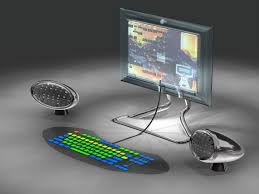
We can find or surf many thing from the internet. We can also do homework using this Hi-Tech computer and find either picture or information from the internet. Play computer have advantages and also disadvantages. Disadvantages of the play computer is example like prohibited website and many game.Below is definition of computer:
A computer is a machine that manipulates data according to a set of instructions.
Although mechanical examples of computers have existed through much of recorded human history, the first resembling a modern computer were developed in the mid-20th century (1940–1945). The first electronic computers were the size of a large room, consuming as much power as several hundred modern personal computers (PC).
Although mechanical examples of computers have existed through much of recorded human history, the first resembling a modern computer were developed in the mid-20th century (1940–1945). The first electronic computers were the size of a large room, consuming as much power as several hundred modern personal computers (PC).
[1] Modern computers based on tiny integrated circuits are millions to billions of times more capable than the early machines, and occupy a fraction of the space.
[2] Simple computers are small enough to fit into a wristwatch, and can be powered by a watch battery. Personal computers in their various forms are icons of the Information Age, what most people think of as a "computer", but the embedded computers found in devices ranging from fighter aircraft to industrial robots, digital cameras, and toys are the most numerous.
The ability to store and execute lists of instructions called programs makes computers extremely versatile, distinguishing them from calculators. The Church–Turing thesis is a mathematical statement of this versatility: any computer with a certain minimum capability is, in principle, capable of performing the same tasks that any other computer can perform. Therefore computers ranging from a personal digital assistant to a supercomputer are all able to perform the same computational tasks, given enough time and storage capacity.
The ability to store and execute lists of instructions called programs makes computers extremely versatile, distinguishing them from calculators. The Church–Turing thesis is a mathematical statement of this versatility: any computer with a certain minimum capability is, in principle, capable of performing the same tasks that any other computer can perform. Therefore computers ranging from a personal digital assistant to a supercomputer are all able to perform the same computational tasks, given enough time and storage capacity.
1st generation of computer

Suanpan (the number represented on this abacus is 6,302,715,408)

Yazu Arithmometer. Patented in Japan in 1903. Note the lever for turning the gears of the calculator

Punched card system of a music machine, also referred to as Book music, a one-stop European medium for organs
Second generation

Third generation and future